

Urban Life
'From Yangon to Samutprakarn: lives of Myanmar women workers'

လွန်ခဲ့သော ၂ နှစ် က
BAP
As Myanmar becomes the theater of the longest civil war in the world, the second largest Southeast Asian country’s economy convulses amid violent political shocks.
After the military seized power three years ago, women had to make tough choices: staying in their towns or becoming migrants overseas. Young garment factory workers in the main city of Yangon and in neighboring Thailand share their experiences.
Working in Myanmar
Myint Zu*, 24 year-old, considers herself hardworking but she could not accept the thought of sleeping over at the factory three nights a week for overtime shift (OT). But it is no longer an option for workers in this garment factory in Yangon.
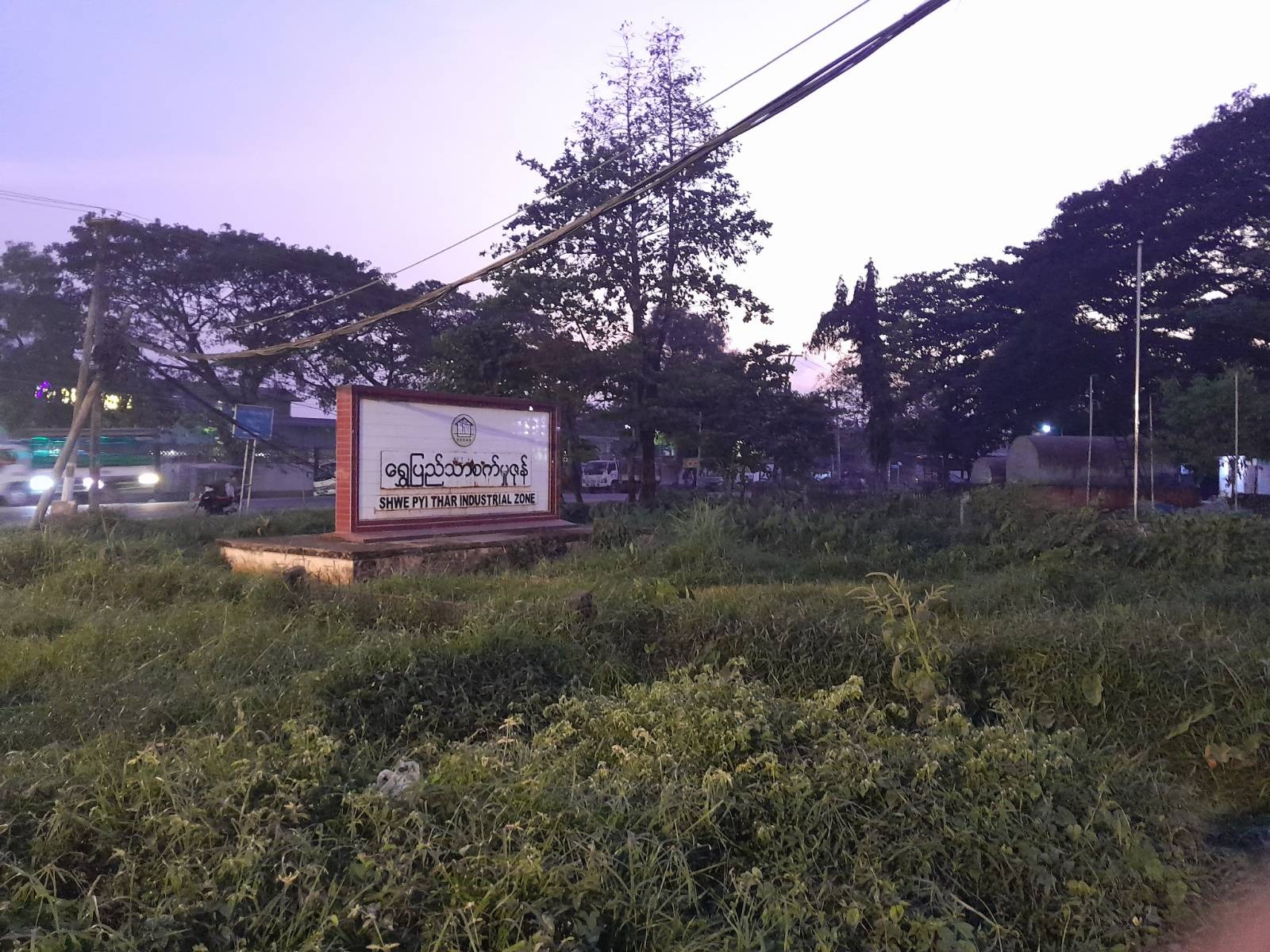
After the Myanmar military staged a coup d’état in February 2021, conditions for factory workers have worsened and there is no way to resolve labor violation cases, as the military government does not uphold the rule of law. In Shwe Pyi Thar, an industrial zone in Yangon, the most urbanized city of Myanmar, many workers are required to take OT or else their wage would be deducted.
“The practice stopped when the officials came to check but after they left it resumes.” angrily recalls Myint Zu.
Shwe Pyi Thar township has been under martial law since March 2021. The township is controlled directly by the military due to intensified anti-junta activities.
Besides, the whole country had been under the curfew imposed by the regime government since February. The curfew starts from 8:00 pm to 4:00 am, prohibiting anyone from being out in the streets during that time. From October 2023, the curfew times were modified from between 1:00 am to 4:00 am in Yangon.
There are no ferries provided for the night shift overtime workers. So they have no choice but to spend the night at their workplace after their working time.
Myint Zu usually finishes her OT at 11.30pm. On some days she has to work until 3am, leaving her no choice but to sleep over at the factory.
She was afraid to go home at night because of robbers roaming the streets and soldiers patrolling.
“ It is dangerous for females to be out on the streets during these times. For males, there is risk of being caught by patrolling soldiers” said Myint Zu , when asked why workers cannot go back to their home at midnight.
The factory does not provide shuttle buses or sleeping spaces for its night-shift overtime workers. So the workers, including Myint Zu, sleep on top of their working tables, laying on the cement floor the sewing machine and other tools. The morning shift resumes at 7:30 am at her factory.
“The next morning, my body aches all over,” said Myint Zu. Some of her colleagues have fallen sick. Myint Zu, herself, suffers muscle ache in her legs and the pain worsens mostly after the all day all night overtime work, which is from 7:30 am to 3 am the next day.
Win Win, a garment factory worker, got sick because of the continuous working days including on Sunday.
“I have been working all week and I still cannot get rest on Sunday” said Win Win. She officially refused to work overtime on Sunday and takes her off day right. But as a result of her refusal to work on Sundays, the factory deducts 17 percent from her monthly salary.
Win Win said “ I do not dare to refuse overtime again since they deduct that much”.
As some male workers also take the night shifts, sometimes Myint Zu is also worried when she leaves the common hall to take a shower. Plus, they also bear the nuisance of mosquitoes as the factory does not allow them to use mosquito nets.
“I cannot resist taking a shower after work because the pieces of clothes make me itchy” said Myint Zu, in explaining why the post-work shower is necessary for sewing workers like her.
Health and safety issues at the workplace have become the most worrisome labour rights violations for Myanmar factory workers in 2023, according to the recent report by the local labour union Solidarity of Trade Union Myanmar (STUM).
Women workers face open sexual harassment and pressure to meet the production target. Most of the female factory workers are in the garment industry.
The Myanmar garment industry supplies cloth to many international brands. Even though many of them have left their business in Myanmar citing the deteriorating human rights, the divestment has not led to substantial change in politics. Moreover these brands are likely to Myanmar because of cheap labour, according to a labour rights activist.
“Although it is difficult for employers to deal with the irregular electricity supply and erratic transportation schedule, the labor cost in Myanmar is very cheap.” said Tin Tun, a local labor activist.
In the first week of October 2023, the junta regime announced the increase of minimum daily wage by adding 1000 Kyats as stipend to the current 4800 Kyats minimum wage set by the previous elected government.
The new minimum wage was supposed to be 5,800 Kyats since Oct.1.2023. But despite the increase, local factory workers claim that the new minimum wage cannot cover their daily living costs in urban places such as Yangon.
The coup has led to less foreign investment and capital outflow, reducing the real value of Kyats while the living cost is skyrocketing. A meal for one person and a small pack of menstrual pad can cost up to 1,500 Kyats(0.71 USD on 27 Feb 2024).
In the case of Myint Zu, she earns the basic minimum wage of 5,800 Kyats plus regular attendance fees, great level fees, and bonus fees.
Myint Zu has many friends who have left the country to work overseas but that would require several processes and considerable sum of money.
For Myint Zu, she could afford for these processes and she is considering moving to another country for better work and pay. But her father disapproved of her plan.
“ I have had this idea( of migrating to another country). But my father did not let me do it,.....” she said.

Working overseas
Over 500 miles away from Yangon, another 24-year old woman from Myanmar has embarked on a different path. Living far from her hometown in Hpa-an in Karen State, southeast of Myanmar, Khaing Lay has become a migrant worker in Thailand - a ‘better opportunity’ millions of Myanmar folks choose.
She worked in a garment factory in Samutprakarn, an industrial town east of Bangkok. She makes 395 baht daily (11 USD) in her work, about 6.8 times more than the minimum wage today in Myanmar. She believes it is a reasonable income given the living cost in the area. A meal in Thailand can cost 40 baht (1.12 USD) and a small pack of sanitary pads is 20 baht (0.56 USD).
But a migrant life is not easy.
In May 2023, Khaing Lay and her eleven colleagues were laid off. The garment factory claimed that their work permit and passport were expired so they could not continue to work at the factory.
It was true that their documents would expire very soon but it was not a reason for dismissal. Migrant workers can return to Myanmar to renew their documents or register in the exemption programs offered by the Thai government.
Living in a foreign country, legal status has become a major concern and costs big sum of money for migrants.
The migrant workers need work permit recommendation from employers to extend the expiration of their work permits
The factory employers failed to inform 12 workers, including Khaing Lay, about the non-extension of their two-year contract that would have given them chance to look for another job.
The Burmese translator in factory told them their contracts have been extended and the factory will take care of their document renew process as before. But it was not so.
“We cannot renew our document by ourselves. It has to be done by the factory officials” said War War*, one of the female workers who were laid off together with Khaing Lay.
The migrant workers need work permit recommendation from employers to extend the expiration of their work permits.
So the migrants need an employer to have a work permit. Even if the worker was fired, those with active work permit can help to find another job legally.
When Khaing Lay and colleagues were fired, it was also the time their work permit expired. They could not try to find a new employer as their work permit had expired.
The garment factory was ordered by the Labour Protection and Welfare Office to compensate the displaced workers. It is unclear why Khaing Lay and her colleagues were dismissed. But one of the reasons could be that the garment industry in Thailand is in a downward trend due to the cheap workforce in other nearby countries.
Most garment factory workers are women because it does not require extraneous physical labour and high education. In the past few years, many garment factories in Thailand have run out of business, ending careers for many women workers both Thai and non-Thai.
Khaing Lay spent 5 months looking for a new job. She noticed that it has become competitive, possibly because there are more Myanmar workers who wish to find work in Thailand.
Despite migrating to Thailand before the recent political shock, the effects of the 2021 power grab have began to affect Myanmar migrants in Thailand.
In December 2023, the Myanmar Embassy in Thailand announced that it will only renew passports for workers who pay 2 percent of their income tax - a new policy imposed by the military government in the countries where many Myanmar migrants live, such as in Thailand, Singapore and Japan.
She has mixed feelings about her decision to seek better fortune in a foreign country. Although it is not financially wise with the rising living cost at home and she also enjoys greater independence in Thailand. But Khaing Lay misses her one-year-old baby who is living with her parents-in-law in Myanmar.
“My grandfather was disappointed when I left home at 15, but actually, I came here as I wished,” said Khaing Lay. “Despite everything, I want to go back someday and raise my kid in a Myanmar school.”
Difficult to defend their rights
Struggling against the worsening economy, factory workers in Myanmar also have little space to defend their rights. After the coup, any kind of protest, whistleblowing or collaboration with the labour union risk putting them as the target of the military government.
In Yangon, Myint Zu found herself and her colleagues facing several labor violations and abuses.
“Supervisors sometimes hit the back and hands or knock on the heads of the workers. But they try to leave no physical trace of their abuses.”
Similar stories happened in other garment factories. San Nwe was forced to sign a resignation letter in December 2023 for speaking up against the line manager who insulted her colleague.
Even though she was reinstated later with help from a labour activist who brought the issue to the local labour office, there has been no punishment for the manager or promises for a better working environment.
In Thailand, speaking up about labour violations in factories is easier. Even though migrant workers cannot establish their own labour union, they can join the unions led by Thai workers.
Thanks to the help of the Workers Union of Spinning & Weaving Industries of Thailand, Khaing Lay received 71,100 baht (1,994 USD) compensation from the factory. She also received financial support under social security during her unemployment.
Myanmar was given a 9/100 score for freedom in political rights and civil liberties in 2023 by the Freedom Fund while Thailand was granted a 30/100 score.
Labour rights activists observe that women workers like to stay in the country if the economy was better. But the current situation leaves them with very limited option.
“Many people cannot afford the cost of being migrant workers in another country,” said Daw Myo Myo Aye, a member of a labour union based in Myanmar. “Those who stay in Myanmar hope that their wages would increase and everything will be better in the future.”
*Name has been changed
Burma Associated Press