

Urban Life
Racial, religious bigotry brings more misery in war-torn Myanmar

လွန်ခဲ့သော ၂ နှစ် က
Ma Nan's dream of building a home in her hometown has been broken.
Ma Nan is a Pa-O ethnic woman who was born, raised and holds an identification card issued in that town, used to be happy collecting things for her dream home.
She sold a home and land where she was married and dreamed of moving back to her hometown and building a house at her parents' property.
But all of those dreams never happened because of the rules of her hometown related to marrying other nationalities.
"It is not committing crimes. We already bought all the things needed to build a house but I still need to plant pillars. I complained to the office as the administrator said we're not allowed to stay before we got permission," said Ma Nan who was not allowed to build her house.
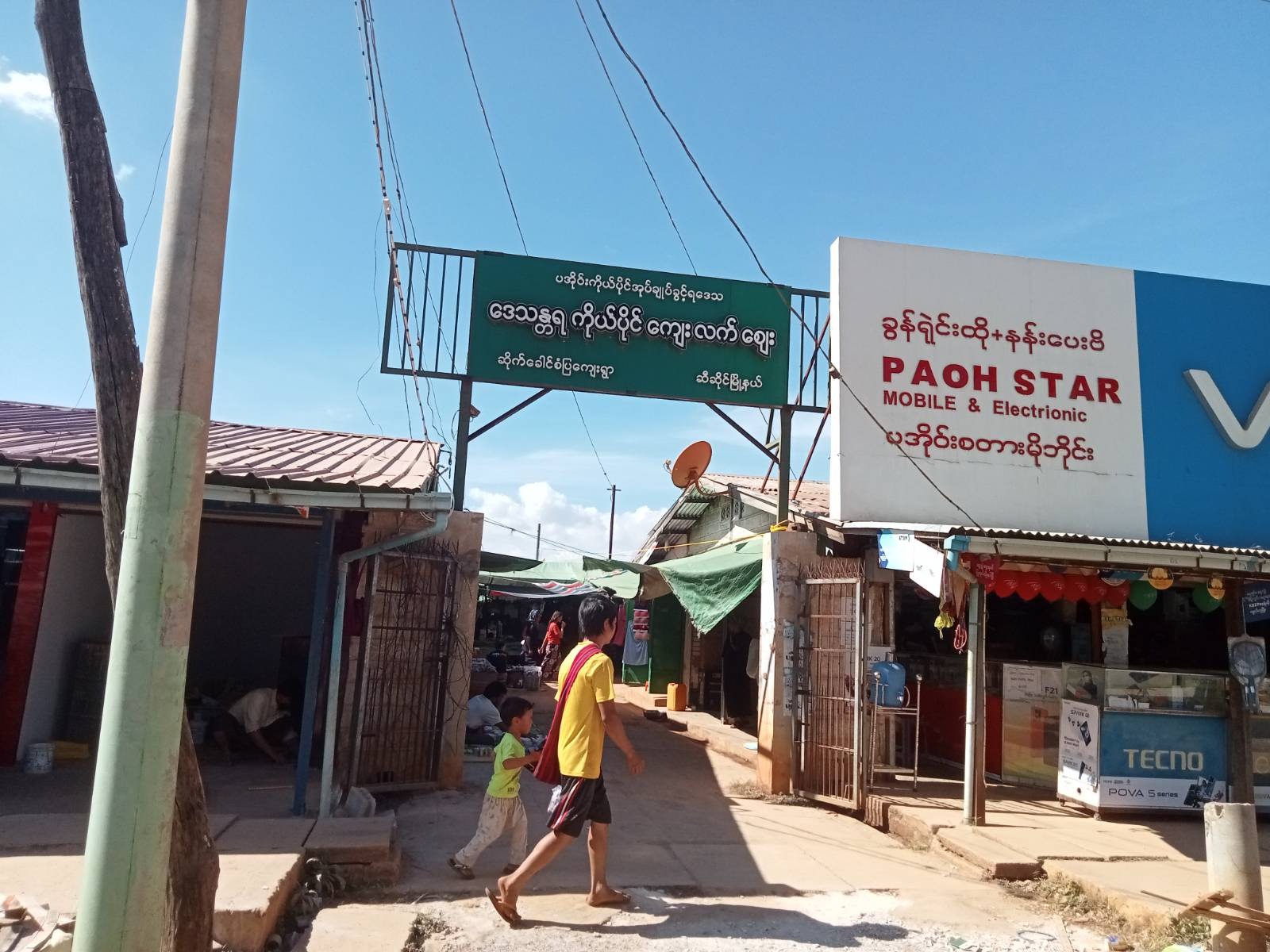
Hsaikhkawng (Sanpya village) town in the Pa-O Self-Administered region in Southern Shan State is known for racism and for discriminating religion.
People from other religion and other ethnicity are not allowed to buy house or property in the Pa-O Self-Administered region. In addition, it also forbids them to rent home.
Although Ma Nan's husband is Buddhist, he is an ethnic Gurkha. Because of her husband’s ethnicity, they have been prohibited to build house, forcing them to move to Hsihseng town. Hsaikhkawng is a big village but it has hospital, post office, electricity office and private bank.
It is more prosperous than Hsihseng town, which is located ten miles away. But people are accepted in Hsaikhkawng as a small town with development.
"In some part of the village Burmese people are not allowed to enter. Only Pa-O people are allowed to live in some wards. I have been told that me and my children can sleep over but not my husband," Ma Nan shared about how racism occurred in Hsaikhkawng.
Hsihseng town is located south of Hsaikhkawng and it has various religious buildings.
In addition, Banyin and Nawngmun villages, which have lesser population and located near Hsaikhkawng also have various religious buildings. In those villages, any nationals are allowed to settle.
U Tun Kyi, leading committee member of the Spring Revolution Interfaith Network said places like Hsaikhkawng would continue to exist as long as there is a military dictatorship.
"The military is using this as a weapon," he said.
Tun Kyi shared his opinion that the military and its affiliated individuals are profiting from discrimination against religions and races.
It is reported that the population of the village is 24,654 according to 2014 census. Only Buddhists are allowed to settle in the village. Chinese, Muslim, Gurkhas and other races are not allowed to live inside the village. That's why, there are no church for Christian, temples for Chinese and Hindu and mosque for Muslim religion.
Some Christian people who have been settled in the area long time ago are staying outside the small town. They are also forbidden to buy lands and settle inside the town.
The influence of Buddhist monks and Pa-O National Organization (currently known as people's militia group) are enormous. That's why, the influence of successive government authorities is almost non-existent there.
Like Ma Nan and her family (with a family member who is not of the same religion) they are not allowed to settle in Hsaikhkawng.
Not everyone dare to sell lands here to Buddhist or Burmese national. It only works if they can bring a signature of powerful Pa-O people. It has been very long since this is a place has become a haven for religious oppression and racial discrimination
Ma Su, a pseudonym, is another the person who lost her right to live in the town even though she is a Pa-O citizen.
She is holding an identification card and used to do business for many years in Hsaikhkawng. But she was not allowed to settle there, so she stopped construction of her house.
Although Ma Su is a Buddhist, her grandfather was a Muslim and that disqualified her from settling in the town.
She is not allowed to sleep over at her house and shop as monks object to it. Thus, she only attends to her shop everyday to do her business.
"Not everyone dare to sell lands here to Buddhist or Burmese national. It only works if they can bring a signature of powerful Pa-O people. It has been very long since this is a place has become a haven for religious oppression and racial discrimination," a friend of Ma Su said.
Not only local and businessmen, but also foreign investments such as Ooredoo telecom is not allowed to operate their business for the same reasons. Although Ooredoo paid compensation to the respective landlords and monks to build telecom tower, they have not been allowed to build one.
"They are one of a kind. The ruling government has no power here. Someone might won a lawsuit in accordance with law but the court ruling could not be imposed as no one can pass through regional groups," said an employee who is working at a government office in Hsihseng.
Hsaikhkawng is controlled by PNO. The main businesses of the town are planting opium, agriculture and livestock. The local produce is transported to Taunggyi, Aungban and other towns as well as Thailand and China.
The Pa-O people are the majority people in Hsaikhkawng and some Shan, Burma and other ethnic groups also live in the town but most of them are Buddhists.
Although other religions are forbidden to settle in Hsaikhkawng, people with different religions are allowed to do business in the market. But, Pa-O ethnic people are given priority over other ethnic groups.
"Pa-O organizations are discriminating other people, even though they commit the same crimes," said a Burmese in Hsaikhkawng.
An elderly Phoe Hla (a pseudonym) said Hsaikhkawng is a good place to do business even though there are religious and racial discrimination.
"People listen seriously to monks as this is a place with strong religious beliefs. All this things happen because locals don't accept people from different religions," said Phoe Hla, "But Pa-O people are honest."
There is a tradition that a person from each of every house must go to support community meetings, Buddhist festivals and other events.
Pa-O people have to wear traditional suits to attend pro-military events and religious events arranged by PNO, which is loyal to junta. Some residence claimed that they have to follow the orders whether they are like or not.
"One person from each of every house must attend. If no one can attend, they have to send someone else. Pa-O people are subservient to the PNO," said an Hsaikhkawng resident.
The worst thing in Hsaikhkawng is religious discrimination.
Internally displaced people with different religions are not accepted in Hsaikhkawng. A Muslim vendor in Hsaikhkawng market said Islam IDPs fleeing from Loikaw were not allowed to stay in Hsaikhkawng.
There are many places similar to Hsaikhkawng in southern Shan State that discriminates different religions.
"Kalar are not allowed (regional usage) and people are not allowed to sell land to them," is an order that exists in Taunggyi, a city in Shan State.
This is especially through in wards where Pa-O people are staying. A Taunggyi resident said he is hoping to reduce this kind of condition.
Ye Hein Aung (a researcher in Burma Civil War Museum) said the origin of religious discrimination started during the rule of former dictator general Ne Win.
Although religious freedom was officially enforced under Ne Win government, the nation was being shaped as Burma-Buddhist nation through religious discrimination, Ye Hein Aung said.
Discrimination occurred even during the transition to democracy between 2010 and 2020 and it even worsened, he added.
"There have been forced eviction and repression of the people (with different religion) even though they have stayed in the place for a long time. It worsened during the transition to democracy," he commented.
Country of Particular Concern (CPC) reported in January that Burma has been included in the list of countries with the most concern for religious freedom.
U.S. Secretary of State Antony J. Blinken has said that twelve countries including Burma have serious violations of religious freedom.
The twelve countries are Burma, China, Cuba, North Korea, Eritrea, Iran, Pakistan, Russia, Saudi Arabia, Tarjikistan and others.
Blinken called on the governments of twelve countries to end the violent attacks on minority communities and their places of worship.
"It's been a long that PNO/PNA used religion to bully the Pa-O people. It is not so different with the regime," said a young Pa-O resident in Hsaikhkawng .
Youth organizations do not accept the rule of PNO/PNA anymore. A declaration issued in May 2023 by eleven Pa-O youth groups said that PNA does not represent the whole Pa-O nationals.
No matter how experts and human right activists from local and abroad urge, as long as the influence of local authorities and religious leaders continues exist, discrimination will continue in Hsaikhkawng.
That's why Ma Nan said that she does not want her children to experience discrimination.
"I have to stay quiet in this bad time. Even if I complain to the higher authorities, it will finally end up in the hand of the heads of autonomous region. If things get better, I will chose to stay here," said Ma Nan.
Burma Associated Press